
The Legend of Awazé
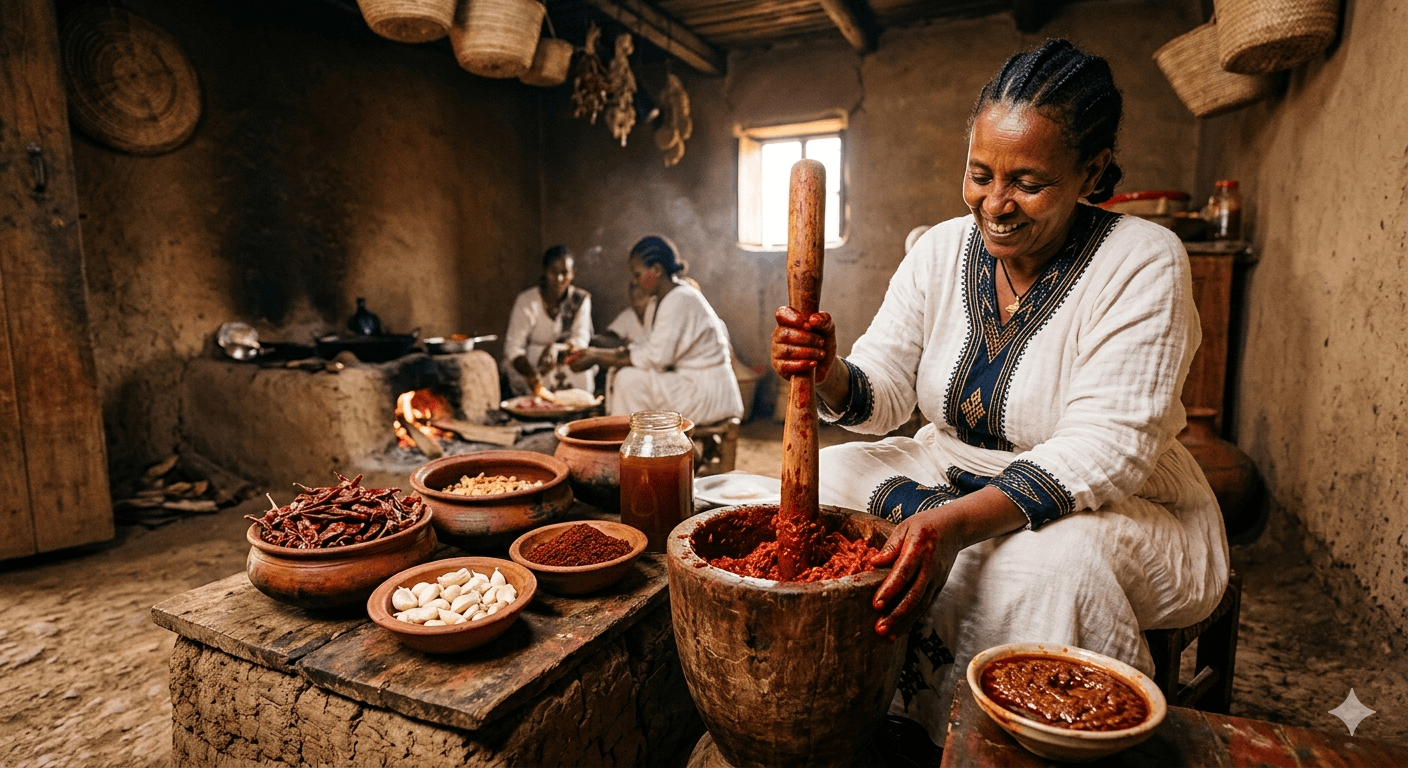
For over five hundred years, awazé has graced the tables of Ethiopian royal courts and village feasts alike. Born in the highlands of the Ethiopian plateau, this fire-red paste was first recorded in the kitchens of Emperor Zara Yaqob in the 15th century — a condiment so prized it was presented as a gift to visiting dignitaries.
The word awazé carries profound meaning: in the old court tongue, it translates as "the voice that announces fire" — a fitting name for a paste that speaks before you taste it, its aroma filling the room with the warmth of ancient spice routes.
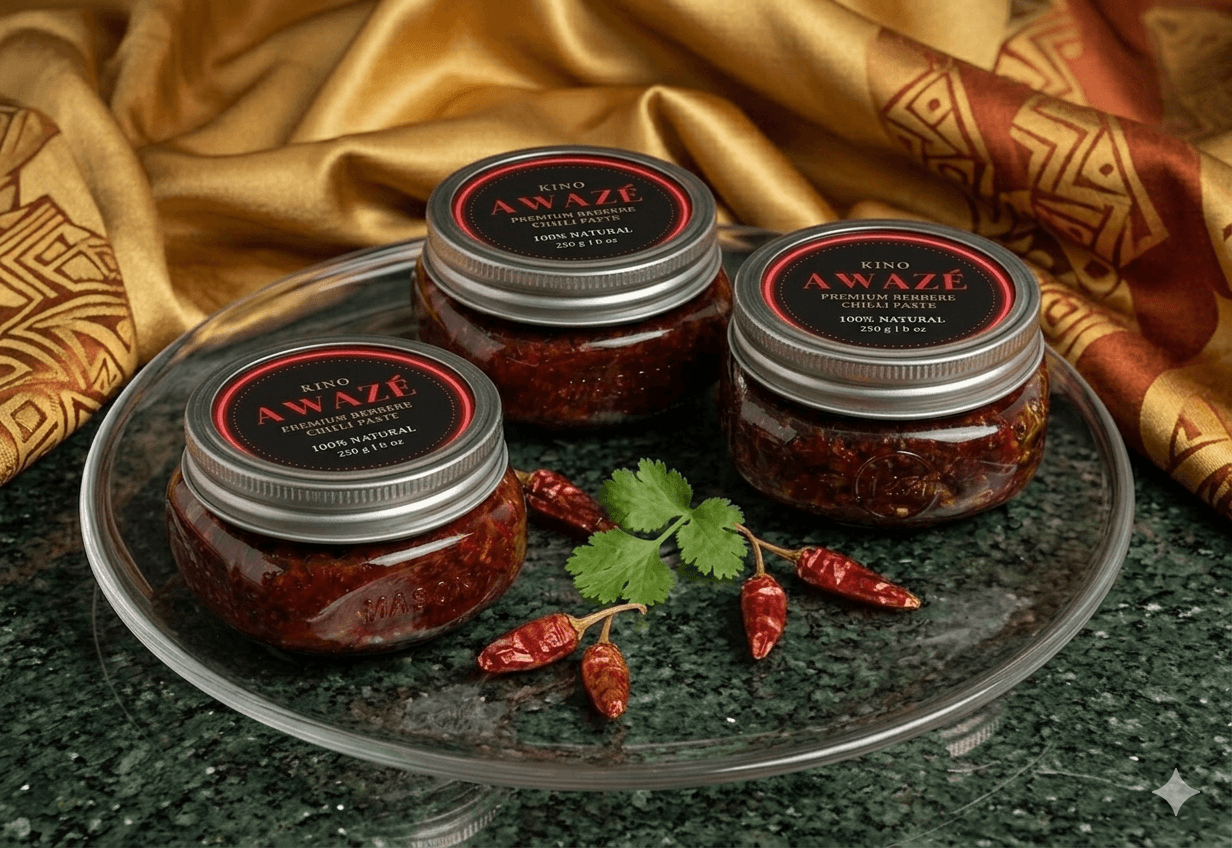
At its heart lies berbere — Ethiopia's sacred spice blend — married with aged chilies, bishop's weed (netch azmud), sacred basil (besobela), and tej, the traditional honey wine that carries the paste's heat into a lingering sweetness. Together they form a flavor unlike any other: bold, complex, ancient.
Awazé was not merely food — it was ceremony. It marked celebrations, sealed alliances, and honored guests. To offer awazé was to offer the finest your kitchen could give.